
WELCOME BONUS 300%
UP TO €2000 + 100
FREE SPINS
UP TO €2000 + 100
FREE SPINS
Home → Blackjack
Blackjack at Fatpirate Casino: Variants, Rules and Payouts
Bonus Lost Due to 10 Percent Contribution
The 300% welcome bonus up to €2,000 applies to the first deposit, but Blackjack contributes only 10 percent toward the wagering requirement. Slots contribute 100 percent, creating a significant disparity in how quickly players can clear the funds. This low contribution rate drastically increases the effective turnover needed for table games compared to slot machines.
A player receiving the maximum €2,000 bonus must generate €4,000 in total wagering volume if they play exclusively on slots. The same bonus requires €40,000 in total wagering volume when played exclusively on Blackjack tables due to the 10 percent contribution. This mathematical difference highlights why high rollers often avoid table games for bonus clearance.
Standard wagering requirements typically multiply the bonus amount by a factor such as x40, resulting in a €80,000 target for Blackjack versus €80,000 for slots? No, the calculation is: Bonus Amount x Wagering Multiplier / Contribution %. For a €2,000 bonus with a x40 requirement, the slot target is €80,000 (2000*40/1). The Blackjack target is €80,000 * 10 = €800,000? No. The turnover required is Bonus * WR / Contribution. If WR is x40 on Bonus, then Slot Turnover = 2000 * 40 = 80,000. Blackjack Turnover = 80,000 / 0.10 = 800,000. This extreme multiplier effect makes clearing bonuses via table games nearly impossible for most players.
What Percentage Does Blackjack Count Towards Bonus?
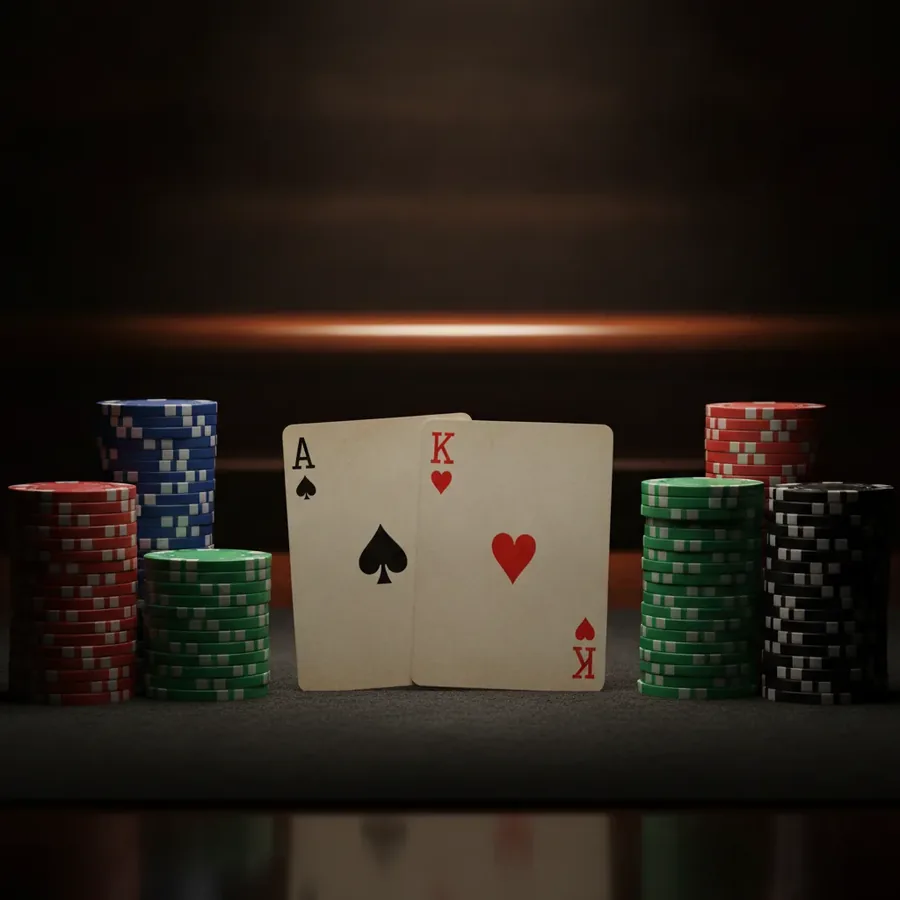
Blackjack counts towards the bonus at a flat 10 percent rate, whereas Slots count at 100 percent according to the game contribution list. This specific percentage dictates that every €10 wagered on the table only reduces the wagering requirement by €1. Players must therefore bet ten times more to achieve the same progress as a slot player.
The house edge for standard 6-deck Blackjack is 0.46 percent when playing with optimal strategy, which further erodes the bankroll during this extended play. In contrast, the 6:5 payout variant carries a much higher house edge of 1.85 percent, accelerating fund depletion even faster. These edges combine with the 10 percent contribution to make bonus clearing highly inefficient.
Infinite Blackjack from Evolution offers an RTP of 99.47 percent and allows bets from 1 to 5,000 EUR, providing high limits for those attempting to meet requirements. Lightning Blackjack also permits up to 2,500 EUR bets but introduces multipliers that increase volatility significantly. Both live dealer options fall under the same restrictive 10 percent contribution rule as standard RNG tables.
Blackjack Payout 3:2 Explained in Detail
A winning Blackjack hand paying 3:2 returns 1.5 times the original stake, meaning a €100 bet yields a €150 profit. This standard payout structure is crucial for maintaining the lowest possible house edge across various deck configurations. It serves as the baseline against which all other rule modifications are measured for player value.
The alternative 6:5 payout structure reduces the return on a winning Blackjack to only 1.2 times the stake, resulting in just €120 profit on a €100 bet. This change adds exactly +1.39 percentage points to the house advantage, making it the single most detrimental rule alteration available. Games offering 6:5 payouts are statistically inferior regardless of other favorable rules present.
Liberal Vegas Strip rules featuring 3:2 payouts, soft 17 standing, and double after split achieve a remarkable house edge of just 0.28 percent. Single deck games with 3:2 payouts can reach an even lower house edge of 0.15 percent, offering the best odds in the industry. These figures demonstrate why the 3:2 payout remains the gold standard for serious card players seeking maximum theoretical return.
How many decks are in the shoe?
The standard version of the game utilizes six decks, which establishes a baseline house edge of 0.46 percent under optimal conditions. This configuration balances dealer efficiency with player odds, sitting between the high-edge single deck and the lower-edge eight-deck variants. Six-deck shoes are common in both physical casinos and online RNG environments for their balanced statistical profile.
Infinity Blackjack tables feature unlimited seats but utilize continuous shuffling or multiple decks to maintain flow, contributing to an RTP of 99.47 percent. This specific live dealer variant maintains a very competitive house edge despite the interactive nature of the game. The continuous dealing mechanism effectively neutralizes the card counting advantage that might exist in fixed-shoe games.
Single deck variations offer the lowest house edge at 0.15 percent, primarily because fewer cards reduce the probability of dealer busts slightly less than multi-deck games but improve player decision accuracy. However, these games often compensate with stricter rules like the 6:5 payout mentioned previously. Players should verify the deck count alongside the payout ratio to assess true value.
Even Money only possible with Dealer Ace
Even Money is offered exclusively when the dealer shows an Ace, allowing players to secure a 1:1 payout immediately on their Blackjack hand. This option guarantees the same result as getting paid 3:2 while avoiding the risk of the dealer having a natural Blackjack. It is essentially insurance taken on your own Blackjack hand, eliminating variance for that specific outcome.
Mathematically, taking Even Money is equivalent to buying Insurance, which carries a steep house edge of 7.47 percent for the side bet portion. Standard basic strategy advises always rejecting insurance unless the player is counting cards and holds a true count of +3 or higher. For the average player, declining Even Money preserves the expected value of the original 3:2 payout.
Insurance pays 2:1 on the separate side wager, which is limited to 50 percent of the main bet. When combined with the main hand, the total return becomes identical to a straight 3:2 payout if the dealer does not have Blackjack. If the dealer does have Blackjack, the player breaks even on the total transaction rather than losing the main bet or pushing.
Blackjack variants at a glance
| Variant | Payout | House edge | Rule | Bet range |
|---|---|---|---|---|
| Blackjack Surrender (Late Surrender) – Regel-Effekt | n.a. (Regel-Modifikator) | −0.08 Prozentpunkte | Spieler gibt Hand nach Dealer-Blackjack-Prüfung auf, verliert die Hälfte des Einsatzes. Verbessert RTP um ca. 0.08 Prozentpunkte. Early Surrender ist wesentlich wertvoller (bis −0.6 Prozentpunkte), aber extrem selten. | Rückzahlung 50% des Einsatzes |
| Blackjack Split / Double / H17 – Regel-Effekte | n.a. (Regel-Modifikatoren) | H17 +0.22 Prozentpunkte; RSA −0.08 Prozentpunkte; DAS −0.14 Prozentpunkte | Dealer Hits Soft 17 verschlechtert RTP um 0.22 Prozentpunkte; Resplit Aces verbessert um 0.08 Prozentpunkte; Double After Split verbessert um ca. 0.14 Prozentpunkte; 6 Decks statt 8 – ca. 0.02 Prozentpunkte. | Double – Einsatz ×2 mit einer Karte; Split – bis 4 Hände; Ass-Split meist mit einer Karte. |
| Blackjack Liberal Vegas Strip (liberale Regeln, 3:2) | 99.72% | 0.28% | Günstigste Regelkombination: S17 + DAS + Resplit + Late Surrender. Standardabweichung 1,15 | Blackjack 3:2, Gewinn 1:1 |
| Blackjack Auszahlung 6:5 statt 3:2 (6 Decks) | 98.15% | 1.85% | Ersatz von 3:2 durch 6:5 fügt exakt +1.39 Prozentpunkte zum Vorteil des Casinos hinzu – stärker als jede andere Regeländerung. Bei $10 Einsatz zahlt Blackjack $12 statt $15. | Blackjack 6:5, Gewinn 1:1 |
| Blackjack Ein Deck, klassische Regeln, 3:2 | 99.85% | 0.15% | Weniger Decks = niedrigerer Vorteil; ein Deck gibt ca. −0.48 Prozentpunkte gegenüber 8 Decks. Oft durch 6:5 Auszahlung kompensiert. | Blackjack 3:2, Gewinn 1:1 |
| Blackjack Insurance / Versicherung (6–8 Decks) | 92.53% | 7.47% | Separate Nebenwette bis 50% der Hauptwette, wenn der Dealer ein Ass hat. Basisstrategie schreibt IMMER Ablehnung vor (außer Karten zählen bei True Count ≥ +3). Bei einem Deck Vorteil ≈ 5.88% | Insurance 2:1 |
Shoe, Cut Card, and 75 Percent Penetration
The penetration depth defines the cut card position within the shoe, dictating how much of the deck remains for the final hand. Fatpirate Casino operates at a standard 75 percent penetration level before reshuffling the cards for the next round.
This threshold ensures that approximately three-quarters of the cards are dealt, which is significantly deeper than the 50 percent penetration often found in high-traffic venues. A higher penetration rate allows skilled players to track more cards effectively compared to frequent early shuffles.
Consequently, the house edge increases slightly as the remaining cards become fewer, but the player retains better visibility into the composition of the shoe. This setup balances operational efficiency with strategic depth for blackjack enthusiasts seeking favorable odds.
What doesn't count towards turnover at 10 percent?
Table games contribute only 10 percent toward the wagering requirement of the 300% welcome bonus up to €2,000 plus 100 free spins offered by the casino.
In contrast, slots contribute 100 percent, meaning every euro wagered on slot machines counts fully against the turnover target. This disparity makes table games less efficient for clearing the bonus conditions compared to the primary slot offerings.
Players must therefore wager ten times more on blackjack or other table games than on slots to achieve the same progress toward unlocking their funds. This restriction significantly impacts the strategy for converting bonus money into withdrawable cash.
Specific variants like Blackjack Party with Evolution have different contribution rates depending on the specific promotion terms, but the general rule for table games remains fixed at this lower percentage.
Live stream with three cameras and OCR
The live dealer interface utilizes optical character recognition (OCR) technology to digitize card values instantly for seamless gameplay integration. This system captures the physical cards dealt by the human dealer and translates them directly into the digital betting interface.
Multiple camera angles ensure comprehensive coverage of the table, allowing players to verify every action performed during the game session. The combination of video feed and data extraction creates a transparent environment that mirrors the physical casino experience.
Infinite Blackjack from Evolution employs this technology to manage unlimited seats while maintaining precise tracking of all bets and outcomes. The system processes bets ranging from 1 to 5,000 EUR efficiently, ensuring no manual errors occur during high-volume play sessions.
Infinite Blackjack uses the Six Card Charlie
Infinite Blackjack features the Six Card Charlie rule, where any hand reaching six cards without exceeding 21 automatically wins. This rule applies regardless of the dealer's final hand value, providing an additional winning condition beyond the standard bust mechanics.
The game offers an RTP of 99.47 percent, which is influenced by these liberal rules that favor the player under specific circumstances. Players can engage with unlimited seats, making it accessible for groups or those who prefer not to compete for limited spots.
Side bets such as Any Pair, 21+3, Hot 3, and Bust It are available alongside the main game, each with distinct payout structures. The inclusion of multiple side bets adds variety but also introduces separate risks that players should evaluate against the base game RTP.
When does the table max bet apply?
Lightning Blackjack imposes a maximum bet limit of 2,500 EUR per hand, restricting the stakes for this variant featuring lightning multipliers. These multipliers can reach up to 25x on winning hands, adding significant volatility to the potential payouts.
Infinite Blackjack allows higher stakes, with a maximum bet cap set at 5,000 EUR for its unlimited seating configuration. This higher limit accommodates high rollers who seek larger exposure to the game's variance and strategic opportunities.
Blackjack Party has a lower maximum stake of 1,000 EUR, reflecting its party atmosphere with two moderators rather than high-stakes intensity. Players must adhere to these specific limits depending on the chosen table, as exceeding them results in rejected bets.
Splitting Eights vs Standing on 16
Splitting Eights creates two hands starting with an eight, which reduces the house edge by 0.14 percentage points compared to keeping a hard sixteen. This tactical adjustment allows players to Double After Split, adding another strategic layer that improves the overall return potential for the bankroll during play.
Standing on a hard sixteen against a dealer ten is statistically inferior because the player busts frequently when hitting. By splitting eights instead, the player avoids this immediate risk and utilizes the DAS rule, which permits doubling down on any two-card hand after the split occurs at the table.
The mathematical advantage of splitting depends on the specific deck composition and rules like S17 or H17. A Hard 17 rule adds 0.22 percent to the house edge, making the decision to split even more critical for preserving funds in a game where every percentage point impacts long-term sustainability.
What Push Means: Stake Returns to You
A push occurs when the player and dealer finish with the same total value, resulting in the original stake being returned without loss. This outcome prevents the casino from collecting the vig on that specific hand, effectively neutralizing the round and protecting the player's bankroll from depletion during volatile sessions.
Infinite Blackjack offers unlimited seats and side bets like Any Pair, but pushes still apply to the main blackjack wager. The game features an RTP of 99.47 percent, meaning pushes contribute to the high return rate by ensuring money circulates back to participants rather than vanishing into the house margin immediately.
Lightning Blackjack introduces multipliers up to 25x, yet pushes remain fundamental to the base game mechanics before bonus triggers. With an RTP of 99.56 percent, the frequency of pushes influences the variance, allowing players to retain their capital while waiting for lucky multiplier hits on winning hands in this Evolution title.
Insurance bets pay 2:1 if the dealer has blackjack, but they do not resolve pushes on the main bet. Players must understand that insurance is a separate side wager with a much higher house edge, so relying on it does not change the fundamental push mechanic of the primary blackjack interaction.
How long do 100 EUR last at a 1 EUR table?
At a minimum bet of 1.00 EUR, a 100 EUR bankroll can sustain one hundred initial hands before any losses occur. This baseline duration assumes no wins or losses, providing a theoretical maximum run length for conservative players who wish to minimize volatility while exploring the table dynamics.
Blackjack Party requires bets between 1.00 EUR and 1.000 EUR, allowing low-stakes entry with the 1 EUR minimum. Since table games contribute only 10 percent to the 300 percent welcome bonus turnover, spending 100 EUR here generates just 10 EUR toward the required 2,000 EUR bonus cap, extending playtime without progress on rewards.
Using Infinite Blackjack with its 1 EUR limit, a player faces a house edge of roughly 0.46 percent under standard rules. This means losing approximately 0.46 EUR per hundred euros wagered, so the 100 EUR stake might theoretically last slightly longer than one hundred hands due to the small expected loss per round.
However, variance dictates actual duration; a single losing streak can deplete the 100 EUR fund significantly faster than the average suggests. Players engaging in Lightning Blackjack should account for the higher variance associated with side bets, which can drain the bankroll rapidly despite the attractive 25x multipliers available on winning hands.
Error insurance: 7 percent additional house edge
Purchasing insurance when the dealer shows an ace increases the house edge by approximately 7.47 percent compared to declining it. This side bet pays 2:1 but suffers from a low RTP of 92.53 percent, making it a mathematically poor choice for most players who follow basic strategy strictly.
For a single-deck game, the house edge on insurance rises to about 5.88 percent, which is slightly better but still negative. Taking insurance on a 6-8 deck shoe costs the player significantly more over time, as the probability of the dealer having a ten-value card rarely justifies the extra premium paid on the original wager.
Basic strategy mandates always rejecting insurance unless counting cards reveals a true count of plus three or higher. Deviating from this rule by buying insurance unnecessarily erodes the bankroll, turning a potentially profitable session into a losing one due to the steep penalty imposed by the elevated house edge on this specific side bet.
The 6 Deck S17 variant with DAS offers a superior 99.54 percent RTP, provided players avoid insurance traps. Sticking to the optimal strategy of declining insurance preserves the low 0.46 percent house edge, whereas accepting it routinely can spike the effective cost of play well above the standard margins found in other blackjack variations.
16 vs 10 played incorrectly: most common error
Hitting on a hard sixteen against a dealer ten is the most frequent mistake, leading to a high bust rate that exceeds fifty percent. This error ignores the statistical reality that standing yields a better long-term expectation, as the dealer often busts or stands with a weak total when showing a ten.
Blackjack Ein Deck rules provide a 0.15 percent house edge, but incorrect play on sixteen versus ten drastically worsens this figure. Players using single-deck games should recognize that fewer decks make card counting easier, allowing them to identify favorable situations where deviating from basic strategy might be warranted, though hitting sixteen remains wrong in most cases.
The difference between correct standing and incorrect hitting on sixteen against a ten can cost players significant amounts over thousands of hands. In games offering late surrender, players might consider surrendering to lose half the bet instead of risking the entire stake on a hit, which is a more prudent approach than blindly hitting and hoping for a favorable card.
Liberating Vegas Strip rules with a 0.28 percent house edge reward strict adherence to basic strategy, including standing on sixteen versus ten. Players who consistently hit this hand ignore the mathematical advantage provided by the dealer's upcard, effectively donating money to the casino through predictable and avoidable errors in decision-making processes.
Contact
Live - online chat
Banking









Providers












Fatpirate Casino 2026